
Incident Learning & RCA Facilitation
Incident investigations, root cause analysis and learning teams focused on understanding what happened and what needs to change.
- Delivery
- On site facilitation, remote follow-up
- Role
- Facilitator of the learning process
- Captive-funded
- Eligible
- Pricing
- Fixed price, scoped before the work starts
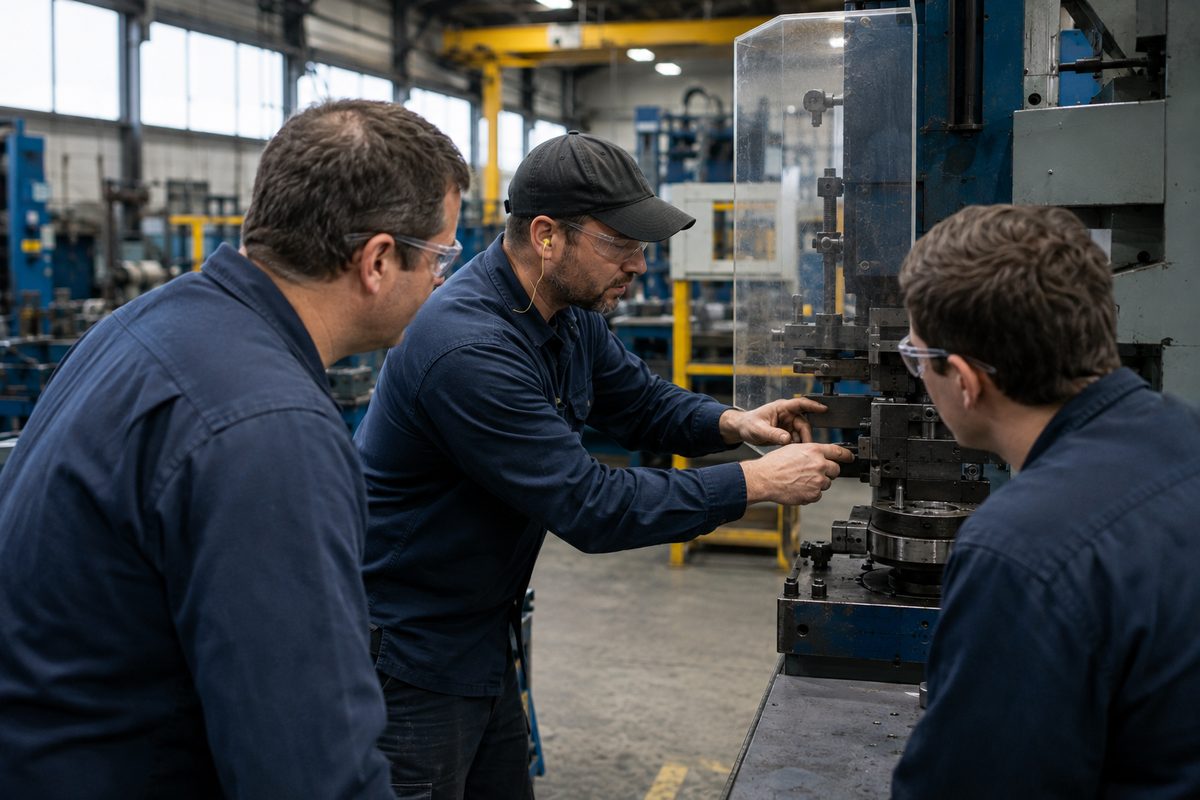
An investigation is worth running only if the organization ends up knowing something it can act on. Many do not, because the account hardens before anyone has asked what normal work looks like, or because the corrective actions are written to close a file rather than to change a condition.
Headland facilitates the learning process. Where an incident requires forensic engineering, a technical exposure determination, or specialist process-safety analysis, that work is referred to or subcontracted from a qualified specialist who owns the technical deliverable.
Where this work is typically applied.
- Incident investigation facilitation
- Root Cause Analysis facilitation
- Learning Teams
- Leadership debriefs
- Corrective-action development
- Investigation training for internal teams
- Organizational-learning workshops
The method, in order.
-
Agree the question the investigation is answering
An investigation run to assign responsibility and one run to understand the conditions produce different information. Decide which this is before it starts.
-
Gather what people know, before the account hardens
Talk to the people involved early, separately, and without a conclusion already drafted.
-
Reconstruct the conditions
What the work normally looks like, what was different, and what made the different version reasonable at the time.
-
Identify the conditions worth changing
Causes that are actually within the organization's control, ranked by whether changing them would prevent recurrence.
-
Corrective actions with owners and dates
Fewer actions, each with a named owner, a date, and a way to verify it happened.
You receive
- Facilitated investigation or learning team session
- Written summary of conditions, findings and contributing factors
- Corrective actions with named owners and verification method
- Leadership debrief
What this is not
- Forensic engineering analysis or an expert technical determination
- Legal or regulatory representation
- An investigation whose purpose is to establish individual fault
Scope boundaries are stated before the work starts. Read the full boundary.
Ask how a facilitated investigation would run here.
Tell us what prompted the question. We will tell you what it takes to answer it properly.